குழந்தை பிறப்பு தொடர்பான சடங்குகள்
குழந்தை பிறப்பு தொடர்பான சடங்குகள் (சம்ஸ்காரங்கள்)
Rituals (Samskaras) related to child birth
Garbhadhana / கருத்தரித்தல்
Garbadhanam is also called “Conception Ceremony” or “Sacrament of Conception” , This is the first of the 16 main rituals (Samskara) of Hinduism, It is the sacred act of conception performed by husband and wife at an astrologically auspicious date and time, with the intention of begetting a healthy and virtuous child., it should not confuse with “first night ” or “Shanthi Muhurtham “
பும்சவனம் / Ritual for Male child Birth
Pumsavana is the second important Samskara among the 16 Hindu Samskaras, performed for a pregnant woman, usually during the 3rd or 4th month of pregnancy. The word Pumsavana means “invoking a child.” This ritual is traditionally performed with the intention of blessing the womb for the birth of a healthy baby boy and ensuring the well-being of the unborn child.
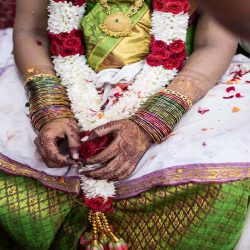
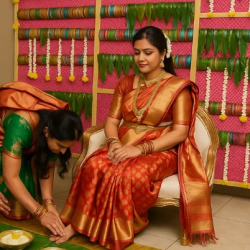
சீமந்தம் / Seamandam / Baby Shower
Seemantham, also known as Valaikaappu, is a traditional South Indian ceremony. It is like a spiritual “baby shower“, performed during the 5th or 7th month of pregnancy to bless the mother and the unborn child for a safe delivery and healthy growth.
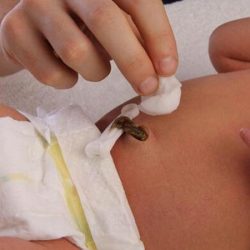
ஜாதகர்மா / Jatakarma
Jatakarma is an important Hindu birth ritual and one of the first Samskaras (rites of passage). It is performed immediately after a baby’s birth to welcome the child, offer blessings, and begin the child’s intellectual and physical journey in life.
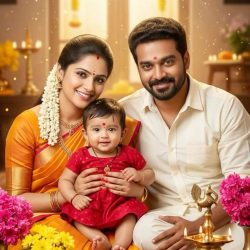
நாமகரணம் / Namakaranam/ Baby Naming Ceremony
Namakaranam is the traditional Hindu naming ceremony for a newborn baby, a significant cultural event where the child receives their first official name, often based on astrology, mythology, or family traditions, usually held a few weeks after birth (like the 11th, 12th, or 27th day) after a postnatal purification.

நிஷ்கிரமானம் / Baby's First Outing
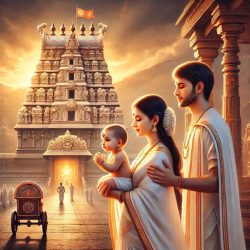
Nishkramana ceremony is the sixth of the 16 rituals of Hinduism, which is the ritual of introducing a child to nature outside the home for the first time, usually in the 4th month after birth, to see the sun and the moon, which symbolizes health, safety, and the child’s entry into society
அன்னப்பிரசன்னம் / Annaprasanna
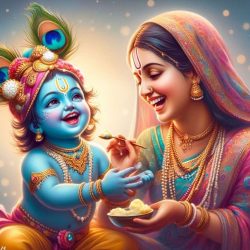
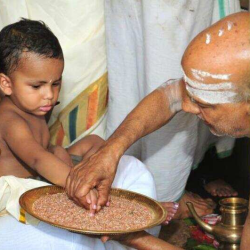
Annaprasanna ( Rice food feeding ceremony) is a traditional Hindu ritual in which a baby is fed solid food (usually rice mixed with honey, curd, and ghee) for the first time after birth; it is celebrated in the sixth month of the baby’s life, under the guidance of auspicious stars and dates, at the clan deity’s temple or at home.
சௌளம் / Mottai Adithal
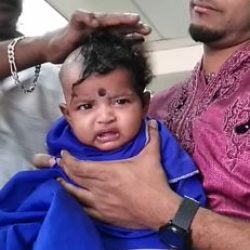
“Choula” or “Mundan” (also called Tonsure) is the ceremonial act of shaving a child’s head for the first time.In tamil culature it is also called as Mottai Adithal, It is one of the sixteen Hindu Samskaras and is also known as Chudakarana or Kesha Khandan ,At the clan deity temple (Kula Deivam)
கர்ண வேதனம் / Ear Piercing Ceremony
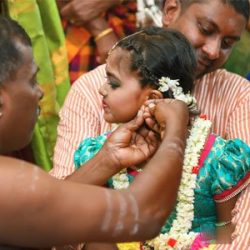
Karnavedhanam Samskaras is a Hindu ear-piercing ceremony performed for both boys and girls. it is also called “kaadhani vizha” in tamil Culture, It symbolizes spiritual awakening, intellect, and good health. The ritual is notmaly done in clan deity’s temple and is usually performed between 3–9 months or 3–5 years of age.
வித்தியாரம்பம் /Akshara Arambam
Akshara Arambam (also known as Aksharabhyasam or Vidyarambham) is a child’s first step into learning. In this ceremony, the child is introduced to writing alphabet (“Akshara” means letters, “Abhyaasam” means practice) with the blessings of Goddess Saraswati and Lord Ganesha, usually performed between the ages of 2 and 5 years.
பூணூல் கல்யாணம் / Upanayanam
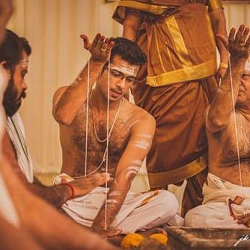
Upanayanam (or Upanayana) means “to lead near” to the Guru or the Divine. It is an important Hindu ceremony that marks a child’s entry into spiritual learning and education. During this ritual, the child receives the sacred thread or poonool (Yajnopavitam) and is taught the Gayatri Mantra. It is often called a “twice-born” ceremony, as it begins the child’s journey as a spiritual student (Brahmacharya).
ருதுசுத்தி / Age Attending Ceremony / Puberty
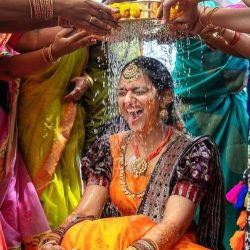
Ruthu Suthi, also known as the Age Attending Ceremony(Puberty), is a traditional ritual performed when a girl attains her first menstruation. This milestone is considered extremely important in Hindu culture, symbolizing the girl’s transition into womanhood