Nishedham Peaceful auspicious time First Night

Nishedham Peaceful auspicious time First Night

நிஷேதம் - சாந்தி முகூர்த்தம் - முதல் இரவு

நிஷேதம் - சாந்தி முகூர்த்தம் - முதல் இரவு
Nishedham - Peaceful auspicious time - First Night
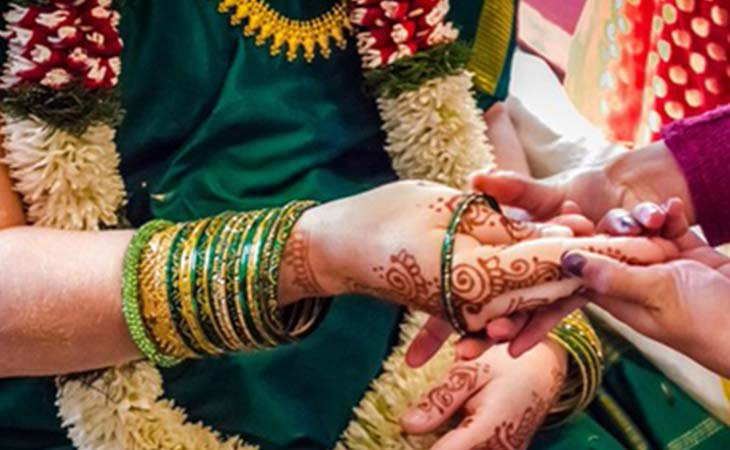
To watch Complete video about Nishedham – Peaceful Auspicious time – first night click here

5 1 1

What is Nisheka or Shanthi Muhurtham?

This refers to the first physical union between newly married couples.
It is also called Shanti Muhurtham or First Night (First Sexual Union).

In Hindu tradition, this is one of the 16 Samskaras (life-cycle rituals), and it is the ritual that precedes conception.

For choosing the first-night muhurtham, the bride must have completed four days after her menstrual cycle.

Auspicious Tamil Months

Thai , Maasi , Panguni , Chithirai , Vaikasi , Aani

Auspicious Nakshatras

  • Ashwini, Moolam
  • Uttaram, Uttaradam
  • Rohini, Ashtam, Thiruvonam
  • Mrigaseerisham, Chithirai, Avittam
  • Swathi, Sathayam
  • Punarpoosam
  • Poosam, Anusham, Utthirattathi
  • Revathi

Auspicious Tithis

  • Dvitiyai, Tritiyai, Panchami, Sapthami, Dasami, Trayodasi
  • Best: Dvitiyai, Sapthami, Trayodasi
  • Avoid: Amavasya, Prathamai, Chaturdasi

Auspicious Lagnas

Taurus (Rishabha) , Gemini (Mithuna) , Virgo (Kanni) , Cancer (Kadagam) , Libra (Tula) , Sagittarius (Dhanus) , Pisces (Meenam)

Avoid fiery signs: Aries and Leo.

Sun, Mars, and Saturn should not occupy the Navamsa Lagna.

Auspicious Weekdays

Monday , Wednesday , Thursday , Friday

Avoid: Tuesday, Saturday, and Sunday

Also avoid the first four days of the menstrual cycle.

Important Rules for Selecting the Shanti Muhurtham Lagna

  • Even if the marriage muhurtham was performed during the waning phase of the Moon, the Shanti Muhurtham must be during the waxing phase.
  • Generally, avoid nakshatras that represent legless, bodiless, or headless stars. However, Uttaradam, Mrigaseerisham, Punarpoosam, Chithirai, Avittam are exceptions and may be used.
  • Avoid the Janma, Anu-Janma, and Tri-Janma Nakshatras for both bride and groom.
  • Choose a day where both bride and groom have Tara Bala.
  • Avoid days where the Moon is in Chandrashtama for either of them.
  • Perform the ritual 5 to 10 days after the woman’s menstruation.
  • Monday, Wednesday, Thursday, and Friday are ideal.
  • Completely avoid Saturday and Tuesday.
  • Avoid Tithis: Prathamai, Chaturthi, Sashti, Ashtami, Navami, Chaturdasi.
  • Avoid Amavasya and Pournami.
  • It is best to perform after the night Yamagandam time ends.

Night Yamagandam Times to Avoid

  • Friday night: 9:00 PM to 10:30 PM
  • Thursday night: 10:30 PM to 12:00 AM
  • Wednesday night: 12:00 AM to 1:30 AM

Avoid Rahu Kalam and Yamagandam.

Use auspicious Hora timings.

The Shanti Muhurtham Lagna (Nisheka Lagna) is extremely important.

The 8th house from the Muhurtham Lagna must be free of planets.

Avoid Lagnas:

Aries , Scorpio , Capricorn
Return journey home

Return journey home

மறு வீடு பயணம்

மறு வீடு பயணம்
Return journey home

To watch Complete video about MaruVeedu Pothal click here

kerala wedding 3 2025 11 23 10 07 07

What is “Maru Veedu Pothal”?

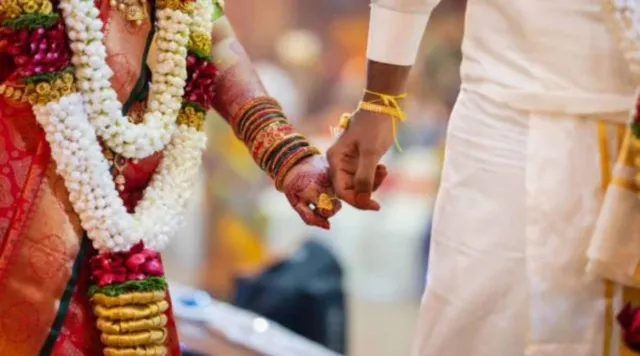
After the wedding, when the bride and groom leave the wedding venue and travel to either the groom’s house or the bride’s house, this journey or visit is known as Maru Veedu Pothal.

  • If the wedding took place at the groom’s house, then the bride and groom visit the bride’s house.
  • If the wedding took place at the bride’s house, then the bride and groom visit the groom’s house.
    This reciprocal visit is the traditional practice.

What is Maru or Maruvu?

After the wedding, the bride’s family traditionally refers to the groom as Marumagan (son-in-law).

The first special feast arranged by the bride’s family for the groom is known as Maru or Maruvu.

This is a ceremonial and respectful meal arranged by the bride’s family to welcome the groom and his family after the marriage.

When is this ritual conducted?

This ritual is usually performed on the 3rd, 5th, 7th, or 9th day after the wedding.

Auspicious Nakshatras

Ashwini , Moolam , Uttaram , Uttaradam , Rohini , Ashtam , Thiruvonam , Mrigaseerisham , Chithirai , Avittam , Swathi , Sathayam , Punarpoosam , Poosam , Anusham , Utthirattathi , Revathi

Nakshatras to Avoid

Kettai , Ayilyam , Thiruvathirai , Magam , Bharani , Pooram , Pooradam , Poorattadhi

Auspicious Tithis

Dvitiyai , Tritiyai , Panchami , Sapthami , Dasami , Trayodasi

Best: Dvitiyai, Sapthami, Trayodasi
Avoid: Amavasya, Prathamai, Chaturdasi

Auspicious Lagnas

Taurus , Gemini , Virgo , Cancer , Libra , Sagittarius , Pisces

Fixed lagnas are especially favourable.

Auspicious Weekdays

Monday , Wednesday , Thursday

Avoid: Tuesday, Saturday, Sunday

Important Rules for Maru Veedu Visit

  1. The day should not fall under Chandrashtama for either the bride or groom.
  2. As this ritual involves food and feasting, the Moon must be strong, and benefic planetary aspects (suba drishti) on the Moon are considered especially auspicious.
Bride’s Entrance Ceremony

Bride’s Entrance Ceremony

மணமகள் கிரகப்பிரவேசம்

மணமகள் கிரகப்பிரவேசம்
Bride’s Entrance Ceremony

To watch Complete video about Bride’s Entrance Ceremony click here

entering the new house

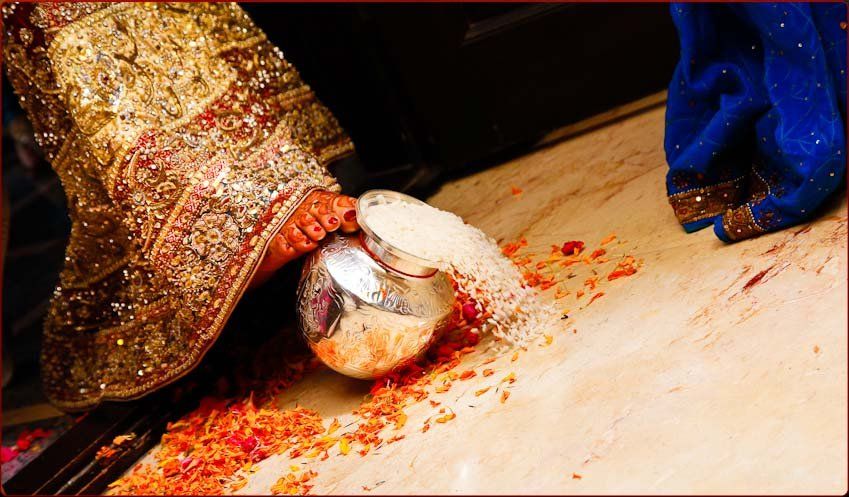
Bride’s Entrance Ceremony (Vadhu Pravesh Muhurtham)

The ritual where the bride enters the groom’s house for the first time after marriage.

1. Bride First Entry to Grooms house

From the day of the marriage until the 16th day, the bride may enter the groom’s house on any day, without considering stars (nakshatras), odd/even dates, or special muhurta.

From the 16th day to one month :   Only odd dates are considered auspicious: 17, 19, 21, 23, 25, 27, 29.
Avoid even dates.

After one month of marriage :   Choose only odd lunar months: 3rd, 5th, 7th, 9th, 11th months.

After one year of marriage :   Choose only odd years: 1st, 3rd, 5th years.

After five years of marriage :   No need to consider year count. Only select a good day (subha muhurta).

Months to Avoid :   Chithirai month, Thai month, and Mala (Adhika) months should be avoided.

Other Recommendations :   The same stars and days that are used for Griha Pravesh (housewarming) can be used for the bride’s entrance as well.

When entering the groom’s home, the bride should step in with her right foot first, as it is considered auspicious.

2. Months to Avoid Staying in the Husband’s House (Within the First Year)

Aani month – Not suitable for the husband’s elder brother.
Aadi month – Not suitable for the mother-in-law.
Adhika month or Malamatham – Not suitable for the husband.

In the first Chithirai month after marriage, the bride should not stay at her parents’ home. It may cause negative effects for the father.

These rules apply only within the first year of marriage.

If the above relatives are no longer alive, these rules do not apply.

3. Auspicious Nakshatras (Stars)

Ashwini, Moolam
Uttaram, Uttaradam
Rohini, Ashtam, Thiruvonam
Mrigasirsha, Chithirai, Avittam
Swathi, Sathayam
Punarpoosam
Poosam, Anusham, Utthirattathi
Revathi

4. Auspicious Tithis

Dvitiyai, Tritiyai, Panchami, Sapthami, Dasami, Trayodasi
Best: Dvitiyai, Sapthami, Trayodasi
Avoid: Amavasya, Prathamai, Chaturdasi

5. Auspicious Lagnas (Ascendants)

Rishabha (Taurus), Mithuna (Gemini), Kanni (Virgo), Kadagam (Cancer), Tula (Libra), Dhanusu (Sagittarius), Meenam (Pisces)
Stable lagnas (fixed signs) are highly preferred.

6. Auspicious Weekdays

Monday, Wednesday, Thursday, Friday
Avoid: Tuesday, Saturday, Sunday

7. Important Rules for Bride’s Entry into the House

  • Avoid the bride’s birth star, weekday, and birth tithi for the entry.
  • Guru (Jupiter) and Shukra (Venus) should not be in Asta (combust).
  • Avoid periods when Venus is positioned opposite the entrance direction of the house (Edir Shukran), especially for the second entry.
  • Avoid Chandrashtama days and days when the Moon transits 6, 8, or 12 from the bride’s natal Moon sign.
  • Avoid days of solar and lunar eclipses.
Bandhakkal or Muhurtha Pillar Planting

Bandhakkal or Muhurtha Pillar Planting

பந்தக்கால் or முகூர்த்த பில்லர் நடுதல்

பந்தக்கால் or முகூர்த்த பில்லர் நடுதல்
Bandhakkal or Muhurtha Pillar Planting

To watch Complete video about Bandhakkaal or Muhurtha Pillar Planting click here

Pandakkal 1 1753374678329

What is Bandhakkaal (Muhurtha Pillar Planting)?

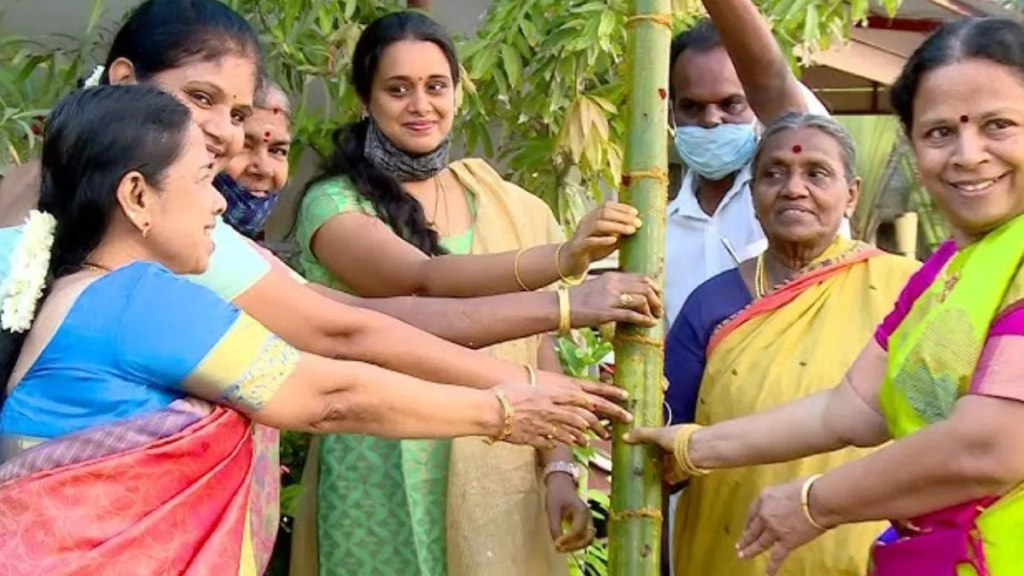
Bandhakkaal refers to the ceremonial bamboo pole planted before auspicious events such as weddings. It is considered the first ritual of the wedding ceremonies. Another name for Bandhakkaal is Muhurtha Kaaḷ.

Typically, a bamboo pole or a branch from a tree that exudes milk (such as Kalyāna Murungai or jackfruit tree) is used for this ritual. The belief is that, just as bamboo and milky trees grow vigorously, the married couple’s life will also flourish.

  • This ritual is performed one to five days before the wedding, on an auspicious day.
  • Bandhakkaal is planted separately in both the bride and groom’s houses.
  • Once the Bandhakkaal is planted, a customary restriction applies: nobody from that house should attend any funeral or mourning events until the wedding is completed.

Bandhakkaal planting procedure

  • The bamboo pole is cleaned with pure water.
  • It is then smeared completely with turmeric, and kumkum is applied.
  • Mango leaves, flowers, and a small turmeric-wrapped coin are tied to the top.
  • The Bandhakkal must be planted in the northeast corner (Eesanya direction) of the house, which is considered auspicious and associated with Lord Shiva.
  • A small pit is dug in the northeast direction, into which navadhanyas (nine grains), coins, and a little milk are placed.
  • The decorated bamboo pole is inserted and positioned firmly in the pit.
  • Close family members, especially sumangali women, gather to perform the puja.
  • Prayers are offered to the Kuladeivam (family deity) and Lord Ganesha.
  • The ritual concludes with lighting camphor and breaking a coconut.

Auspicious Stars (Nakshatras)

  • Ashwini
  • Moolam
  • Uthiram, Uthiradam
  • Rohini, Ashtam, Thiruvonam
  • Mrigaseerisham, Chithirai, Avittam
  • Swathi, Sathayam
  • Punarpoosam
  • Poosam, Anusham, Uthiratadhi
  • Revathi

Auspicious Tithis

Dwithiya , Thrithiya , Panchami , Sapthami , Dasami , Thrayodasi

Tithis to Avoid:Amavasya , Prathamai , Chathurthasi

Auspicious Lagnas

Taurus , Gemini , Virgo , Cancer , Libra , Sagittarius , Pisces

Auspicious Weekdays

Monday , Wednesday , Thursday , Friday

Days to Avoid:Tuesday , Saturday , Sunday

Engagement Date Marking

Engagement Date Marking

நிச்சயதார்த்த நாள் குறித்தல்

நிச்சயதார்த்த நாள் குறித்தல்
Engagement Date Marking

To watch Complete video about Engagement Date Marking click here

Tamil Brahmin Nichayathartham Ceremony 3

Engagement / Betrothal (Nichayathartham)

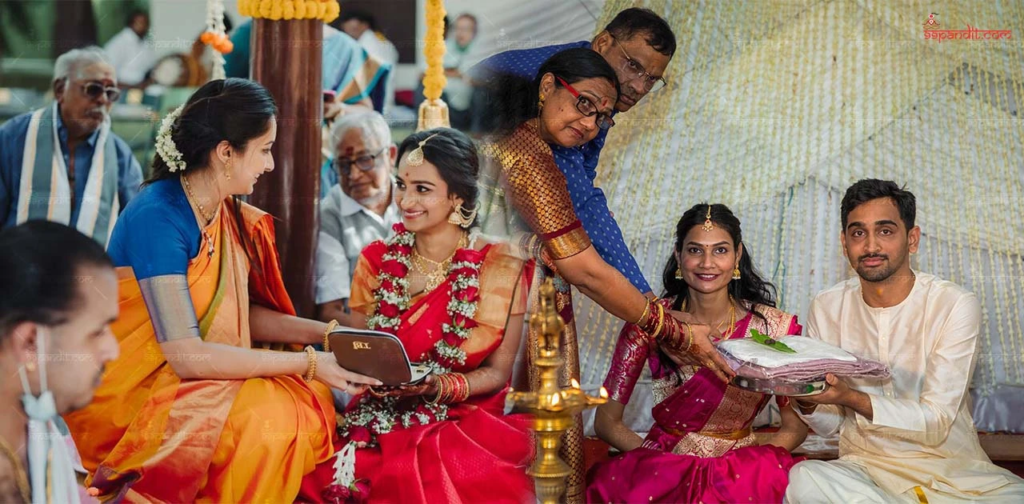
Nichaya Thambulam (Engagement/Betrothal) is a Marriage ceremonial occasion in which the prospective bride and groom formally announce their relationship in the presence of both families.
On this day, the wedding date is usually finalized.
After the engagement, the Muhurtha pathirikai (auspicious wedding date document) should be prepared.

While preparing the Muhurtha pathirikai, all four corners should be applied with turmeric, especially from the bottom upwards, as it is considered auspicious.

Auspicious Stars (Natchathiram) for Engagement

  • Ashwini, Moola
  • Uttara, Uttiradam
  • Rohini, Ashtam, Tiruvonam
  • Mrigaseerisham, Chithirai, Avittam
  • Swathi, Sathayam
  • Punarpoosam
  • Poosam, Anusham, Uttiratadhi
  • Revathi

Auspicious Thithis

  • Dwithiya, Trithiya, Panchami, Sapthami, Dasami, Thrayodasi
  • Dwithiya, Sapthami, Thrayodasi — highly auspicious
  • Amavasya, Prathamai, Chaturdasi — should be avoided

Auspicious Ascendants (Lagnas)

  • Taurus, Gemini, Cancer, Virgo, Libra, Sagittarius, Pisces
  • Aries and Leo (Fiery signs) are generally avoided

Auspicious Weekdays

  • Monday , Wednesday , Thursday , Friday

Rules for Selecting an Engagement Muhurtha

  1.   Benefic planets should occupy trine houses (1, 5, 9) from the ascendant.
  2.  Malefic planets should preferably occupy the 3rd, 6th, or 11th houses.
  3.  The Moon should be strong in the horoscope.
  4.  The 7th house (marriage house) should not be afflicted for a happy married life.
  5.  The 8th house (longevity house) should be clean for a stable and long-lasting marriage.
  6.  Vishti Karana (Bhadra Karana) should be avoided.
  7.  Vyatipata Yoga should not occur on the engagement day.
  8. The birth star, Anu-janma star, and Tri-janma star of both the boy and girl should be avoided.
  9. A day when both of them have favorable astrological conditions (Tara Bala) should be chosen.
  10. Avoid the day when both of them are experiencing Chandrashtama (Moon in the 8th house).
WeCreativez WhatsApp Support
Our customer support team is here to answer your questions. Ask us anything!
👋 Hi, how can I help?